The New Wave of AI Scams and How to Avoid Them
Scammers today are using advances in artificial intelligence (AI) to make fraudulent schemes more believable and harder to spot than ever before.
It used to be easy to spot suspicious emails with obvious misspellings or fake email addresses, but now this has largely been replaced with messages designed to look exactly like legitimate communications from your bank or other businesses.
As these convincing AI scams become more prevalent, understanding how to identify them is essential for protecting your finances.
Read on to learn about the most common types of AI-powered scams, red flags you should look for, and actionable steps you can take to protect your accounts and personal information.
Modern fraud: Understanding AI scams
Today’s scammers are using AI to create convincing fake content that can catch even smart, careful people off guard. While the technology behind these scams is complex, the tactics themselves are simple and designed to take advantage of your trust.
Today’s scammers are using AI to create convincing fake content that can catch even smart, careful people off guard.
Voice cloning and deepfakes
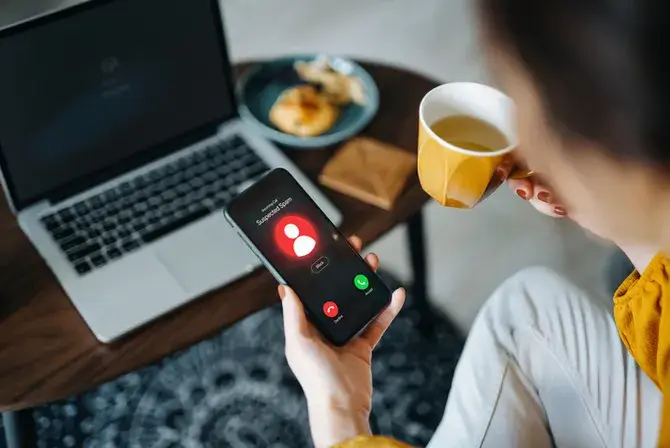
With just a few seconds of audio from a social media video or a leaked voicemail, AI programs can create a realistic clone of a person's voice. Scammers use this technology to design "family emergency" scams that are both scary and persuasive.
For example, a parent or grandparent might get a call that sounds exactly like:
- A call from a grandchild in jail
- A family member stranded while traveling
- A loved one experiencing a medical emergency
AI programs can also create realistic fake videos. A deepfake video is a fake video created using AI to make it look like someone said or did something they never actually said or did.
Videos are often manipulated to show a public figure or even a company executive appearing to endorse a fraudulent investment scheme. These deepfake videos are a dangerous new tool used in financial scams.
Sophisticated phishing
For years, the telltale sign of a phishing email was bad grammar or a generic greeting. AI eliminates those errors. It can now generate flawless, personalized emails and text messages that look identical to official communications from your bank, a government agency, or a company you do business with. This is all in an effort to get you to click on a malicious link.
Urgency and fear
Despite the advanced technology, the scammer's objective remains the same. Scammers know that when people are scared, embarrassed, or rushed, they’re more likely to act before stopping to think. Their goal is to tap into these emotions and trick you into sending money or revealing your personal information.
How to spot fraud: Key red flags in the AI era
Even the smartest people can get caught off guard — which is why slowing down and double-checking matters. Even the most sophisticated scam has some red flags that can give it away. Learning how to spot fraud in the AI era starts with trusting your instincts and looking for these warning signs:
An overwhelming sense of urgency
Scammers create a crisis that requires you to act now. They will tell you that your account has been compromised, a loved one is in danger, or a once-in-a-lifetime opportunity is about to expire. This pressure is designed to make you bypass your logical thinking.
Unusual payment requests
The method of payment is one of the biggest red flags. Scammers almost always demand payment through means that are difficult to trace and nearly impossible to reverse. According to the Federal Trade Commission, if anyone demands you pay them with a wire transfer or cryptocurrency or by purchasing gift cards and reading them the numbers, it is a scam.
Legitimate businesses and government agencies will not ask for payment this way.
Fake websites and suspicious links
Many scams, especially those sent via email and text (also known as "smishing"), are designed to get you to click a malicious link. These messages often create a false sense of urgency, claiming there's a problem with an account, a package couldn't be delivered, or a large purchase was made on your card.
The link may lead to a look-alike website designed to steal your login credentials. Always look for tiny misspellings in the sender’s email address or the website URL. On a computer, you can hover your mouse over a link to see its true destination before clicking. As a rule, avoid clicking links in unsolicited messages altogether.
Before you click, send money, or reply, ask yourself:
- Was I expecting this message?
- Is someone pressuring me to act immediately?
- Can I verify this another way?
Does this payment request seem unusual?
Your first line of defense: Proactive steps to secure your accounts
The best way to fight fraud is to build strong defenses before a scammer ever reaches you. Taking a few proactive steps can dramatically increase your digital security:
Strengthen your passwords and logins
Use strong, unique passwords for every financial account. A long phrase or a random combination of letters, numbers, and symbols is far more secure than a common word. It’s a good idea to enable multi-factor authentication on every account that offers it.
That extra code sent to your phone acts as a second key, and it is one of the most effective ways to prevent an unauthorized person from accessing your account, even if they manage to steal your password.
Control your digital footprint
Be mindful of what you share publicly online. Scammers can scrape social media for photos, personal details about your life, and even clips of your voice to make their impersonation attempts more convincing. Consider setting your social media profiles to private to limit who can see what you post.
Recognize legitimate communication
VACU will never call, text, or email you to ask for your password, PIN, full debit or credit card number, or the security code on the back of your card. If someone asks for this information, you are talking to a scammer.
Action plan: What to do if you suspect a scam
If you find yourself in a situation that feels like a scam, staying calm and following a clear plan is your best course of action.
- Stop and verify: The moment something feels wrong, stop. Do not reply, click any links, or send any money, as a scammer’s power relies on keeping you engaged and under pressure. Never trust contact information given to you in a suspicious call, text, or email. If you get a frantic call from a relative, hang up and call them back on a number you know is theirs. If you receive an urgent email from “Virginia Credit Union,” don't click the link. Instead, close the email, and check your account safely by typing our official website address into your browser or by using our mobile app.
- Report it: If you catch a fraud attempt from the beginning, congrats! You outsmarted the scammers and avoided losing your money, identity, or both. If the scammers are impersonating Virginia Credit Union, please report by forwarding or sending screenshots to reportabuse@vacu.org. For other scams, consider reporting them to the National Fraud Information Center, a service of the nonprofit National Consumers League.
- Freeze accounts: If you inadvertently provide personal information to a scammer, click on a scam link, or become a victim of a scam in any way, contact your financial institution(s) immediately, and file a complaint with the Federal Trade Commission. You can follow our identity theft checklist to ensure you take all of the necessary actions.
- Freeze your credit: If the scam involves your credit, contact the fraud departments of the credit bureaus to file a report and freeze your credit.
- Stay vigilant: Keep up with the latest scams, and trust yourself if something seems suspicious. Brush up on our red flags to keep an eye out for, and know we’re in this together!
A partnership in security: How Virginia Credit Union protects you
Fraud prevention works best when we work together. VACU works behind the scenes to safeguard your accounts. This includes using advanced systems that monitor your account activity 24/7 and looking for transactions that are out of the ordinary for your spending patterns. If we spot potentially fraudulent activity, we will attempt to contact you to verify the transaction.
You can sign up for real-time account alerts via text or email, which notify you of activity and allow you to spot fraud the moment it happens. Our digital banking platforms are built with multiple layers of security, including encryption and secure login protocols to protect your information.
Stay alert, and stay safe
AI scams may be getting more advanced, but a few simple habits can go a long way in protecting you and your family.
By remaining vigilant, questioning urgency, and verifying requests independently, you can protect yourself from even the most advanced scams. Security is a partnership, and your awareness is the most critical part of that defense.